

 Trading Trophy™
Every trader dreams of the same milestone: receiving their first payout.
Passing a prop firm challenge and finally withdrawing profits is one of the most satisfying achievements in trading. It represents discipline, consistency, and proof that trading can become a real career.
However, the reality is brutal.
Thousands of traders attempt prop firm challenges every month, but only a small percentage ever reach their first payout.
So what separates traders who succeed from those who fail?
In this article, we break down the real reasons why most traders never reach their first payout and what successful traders do differently.
Traders focus on profit instead of survival
One of the biggest mistakes beginners make is focusing only on profit targets.
When starting a funded challenge, many traders think:
-
“I need to hit 10% as fast as possible.”
-
“I need to prove I’m profitable.”
-
“I need to make big trades.”
But experienced traders understand something crucial:
Trading success starts with survival.
Instead of chasing profits, they focus on:
-
protecting capital
-
respecting drawdown limits
-
maintaining consistency
This mindset is especially important when trading with prop firms such as
FTMO or MyForexFunds (historically known in the industry).
Professional traders know that staying in the game is the real edge.
Overtrading destroys trading accounts
Another major reason traders fail before reaching their first payout is overtrading.
Many believe that taking more trades will increase their chances of winning.
In reality, successful traders do the opposite.
They wait patiently for high-probability setups.
Instead of trading constantly, they may take:
-
1 or 2 trades per day
-
sometimes no trades at all
Overtrading usually comes from:
-
boredom
-
revenge trading
-
fear of missing out (FOMO)
This behavior often leads to emotional decisions and unnecessary losses.
If you study professional traders, you'll notice that discipline and patience are key traits.
Poor risk management
Risk management is the foundation of profitable trading.
Yet most traders ignore it.
Common mistakes include:
-
risking too much per trade
-
increasing position size after a loss
-
trying to recover drawdowns quickly
Successful traders typically risk only:
0.25% to 1% per trade
This allows them to survive losing streaks without breaking prop firm rules.
Resources like
Babypips explain why risk management is more important than strategy.
Without proper risk control, reaching a payout becomes extremely unlikely.
Emotional trading
Trading is not only a technical skill, it is a psychological game.
Many traders understand their strategy perfectly, but they fail because they cannot control their emotions.
The most common psychological traps include:
Revenge Trading
Trying to win back losses immediately.
Fear
Closing profitable trades too early.
Greed
Holding positions too long hoping for bigger profits.
Impatience
Entering trades that do not match the trading plan.
Learning emotional control is often what separates funded traders from failed traders.
No structured trading plan
Many traders attempt challenges without a real trading plan.
They may have:
-
watched YouTube tutorials
-
followed influencers
-
copied strategies from social media
But they never developed a structured system.
A professional trading plan should include:
-
entry rules
-
stop-loss placement
-
take-profit targets
-
risk per trade
-
maximum trades per day
Without a plan, trading becomes random.
And random trading rarely leads to consistent profits.
Unrealistic expectations from social media
Social media has created a distorted view of trading.
Online, traders often see:
-
screenshots of massive profits
-
luxury cars linked to trading success
-
stories of traders making six figures overnight
What they rarely see are:
-
years of losses
-
thousands of hours studying charts
-
failed prop firm challenges
Real trading success usually comes from long-term discipline.
According to educational resources like
Investopedia, consistent profitability requires experience, emotional control, and strong risk management.
Inconsistency
Consistency is the ultimate key to receiving payouts.
Professional traders aim for:
-
small repeatable gains
-
controlled losses
-
steady growth
Many beginners instead chase big wins.
But prop firm rules reward consistency, not gambling.
The traders who reach payouts are often the ones who simply:
-
follow their plan
-
manage risk carefully
-
stay disciplined over time
The first payout: a major trading milestone
Receiving your first payout is a turning point.
Not because of the money.
But because it proves something powerful:
-
your strategy works
-
your discipline works
-
your consistency works
For many traders, this moment is when trading shifts from a dream to a real professional path.
Why many traders celebrate their first payout
In most professions, achievements are recognized.
Athletes win trophies.
Entrepreneurs celebrate exits.
Employees receive promotions.
But traders often celebrate their success alone.
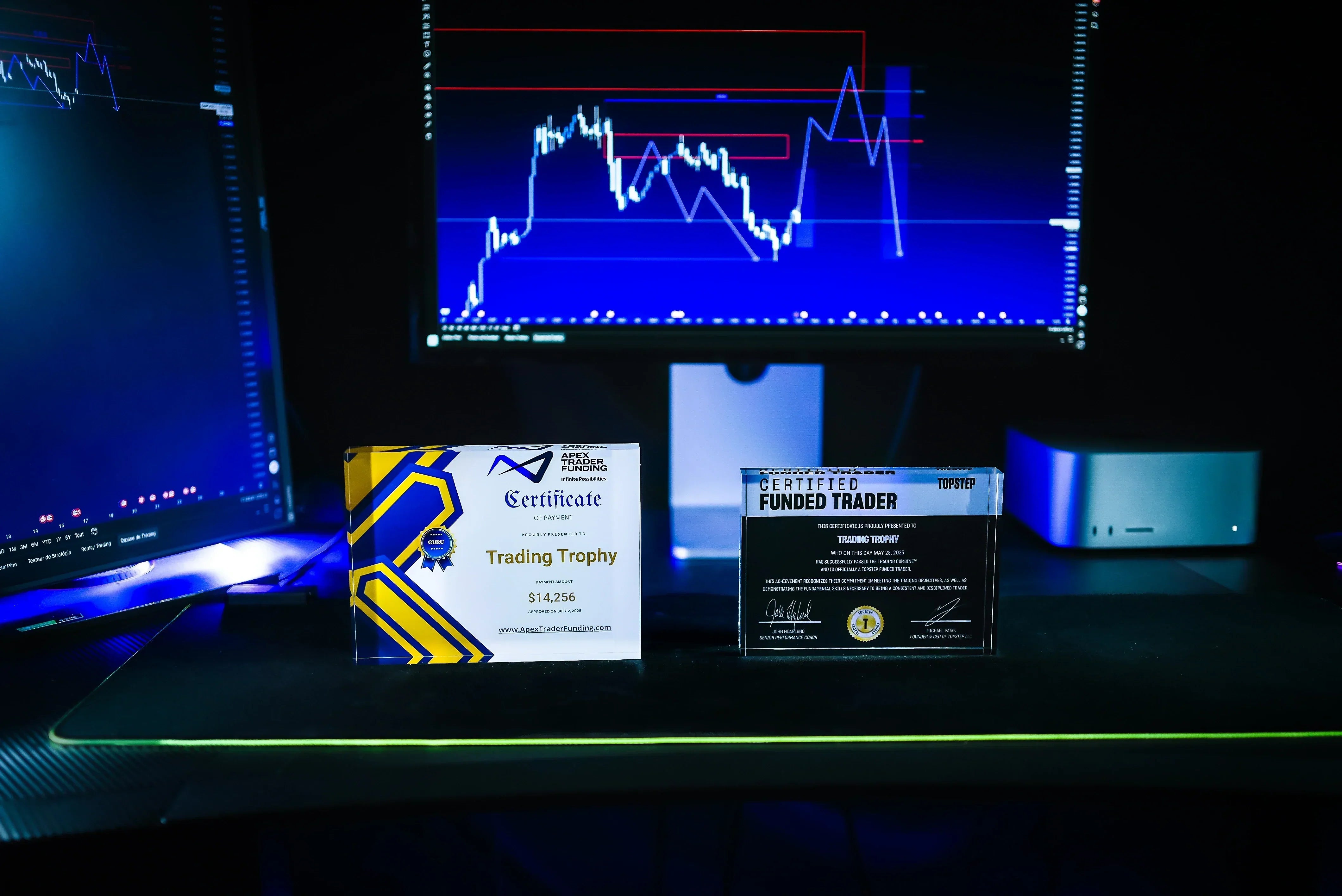
That’s why many funded traders choose to commemorate their milestones such as:
-
their first payout
-
their first funded account
-
their first $10,000 profit milestone
Many traders display these achievements on their desk to stay motivated and remember how far they’ve come.
You can explore examples here:
These milestones serve as daily reminders of the discipline required to succeed in trading.
Final thoughts
Most traders never reach their first payout because they focus on the wrong things.
They chase fast profits instead of consistency.
They trade emotionally instead of following a plan.
They take excessive risks instead of protecting their capital.
But traders who succeed share the same core principles:
-
patience
-
discipline
-
strict risk management
-
consistent execution
And when that first payout finally arrives, it represents more than money.
It represents proof that the journey was worth it.









Trading Trophy™ x Edgyx: revolutionize your trading journal in 2026
Trading Trophy™ x Clickfunded: an exclusive partnership